
Diabetic Foot
The Importance of Timely Diagnosis

Diabetic Foot
The Importance of Timely Diagnosis
Diabetic Foot
What It Is and
How to Prevent
Amputation
If you have diabetes, your feet are at risk. Every year, approximately 1 in 25 people with diabetes undergoes an amputation.
But the good news is that up to 85% of amputations can be prevented with early diagnosis and treatment.
tions can be prevented with early diagnosis and revascularization.
tes worldwide.
suffer a lower limb amputation if
they do not receive proper treat-
ment.
globally due to diabetic complica-
tions.
tions can be prevented with early diagnosis and revascularization.
tes worldwide.
suffer a lower limb amputation if
they do not receive proper treat-
ment.
globally due to diabetic complica-
tions.

Why Do Diabetic Foot
Complications Occur?
Diabetes damages the inside of the arteries, allowing fat to build up (atherosclerosis). Over time,
these arteries narrow or become blocked, significantly reducing blood flow to the legs and feet.
Without enough blood,
tissues DO NOT recei-
ve oxygen or nutrients
Wounds heal very
slowly or do not heal
at all
Infections appear
easily and spread
quickly
The body cannot fight
infections without
circulation

Poor Circulation (Peripheral
Arterial Disease)
Diabetes damages the inner lining of the arteries, leading to the accumulation of plaque (atheros-
clerosis). Over time, these arteries narrow or become completely blocked, drastically reducing
blood flow to the legs and feet.
Pain in the legs or
feet, especially when
walking or resting
Feet that are cold to
the touch compared
to the other limb
Pale or bluish skin
Ulcers that do not
heal.
Lack of hair growth
on the legs or feet.
Specific Complications
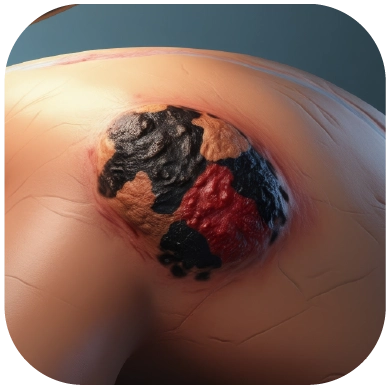
Chronic Ulcers
Cause and Mechanism Open wounds caused by friction, pressure, and poor circulation. They take months to close.
Urgency Level
High (Requires attention within
days)
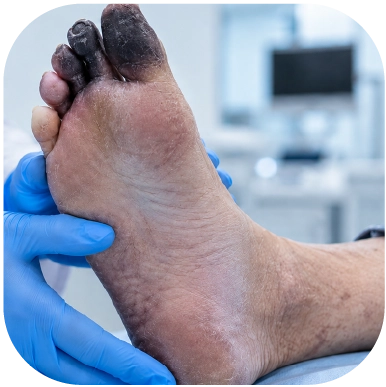
Gangrene
Cause and Mechanism
Tissue death (blackish or bluish appearance) due to a complete lack of blood supply.
Urgency Level
EMERGENCY (Immediate)
How is a
Diabetic
Foot Diagnosed?
Clinical Examination: Visual inspection of the skin, ulcers, color changes, and temperature. Sensitivity tests.
Arterial Color Doppler Ultrasound of the Legs
Angiography: A diagnostic procedure that visuali-
zes the arteries using a contrast agent. It identifies EXACTLY where the blockages are and is essential
before any treatment.
Ankle-Brachial Index (ABI): Compares blood pressure in the ankle vs. the arm. A low ABI indicates
poor circulation.
Doppler Ultrasound: Ultrasound that measures blood flow in the leg arteries.
X-ray: Detects if there is a bone infection (osteomyelitis) or bone changes (Charcot).
Why Angiography is Key
Without angiography, it is impossible to know which arteries are blocked or how to treat them.
Angiography is a low-risk procedure that enables precise diagnosis and planning for endovascular treatment.

How can we
help you?
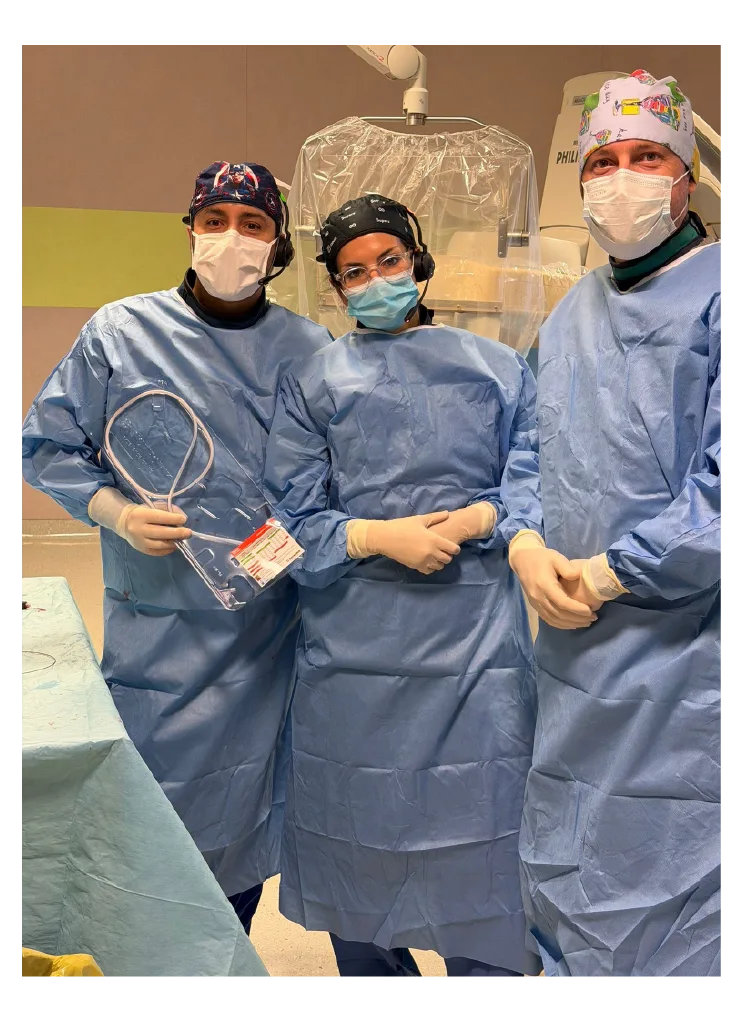
Dr. Mariano Palena, an internationally recognized interventional radiologist, collaborates with vascular centers around the world to offer advanced endovascular treatments aimed at restoring blood flow and preserving the limb through minimally invasive techniques.
Our Mission
is Clear
- Advanced endovascular procedures to improve blood circulation.
- Continuous clinical follow-up to closely evaluate the case’s progression.
- Education and support for long-term limb care.
Our Mission
is Clear
To seek alternatives to amputation whenever possible, without creating false expectations.
We work closely with patients and their caregivers to design a personalized treatment plan that includes:
- Advanced endovascular procedures to improve blood circulation.
- Continuous clinical follow-up to closely evaluate the case’s progression.
- Education and support for long-term limb care.
Contact us
Lorem ipsum dolor sit amet, consectetur adipiscing elit. Ut elit tellus, luctus nec ullamcorper mattis, pulvinar dapibus leo.
Frequently asked questions
An ulcer is an open wound. Gangrene is dead tissue. If an ulcer is left untreated, it can turn into gangrene. Gangrene REQUIRES urgent intervention.
No. With timely care and adequate circulation, 85% of ulcers heal without amputation. The key is: early diagnosis + correct treatment + glucose control.
Yes. If you have neuropathy (loss of sensation), an ulcer can develop without you feeling any pain. This is why DAILY inspection is critical. Many ulcers are discovered too late.
Very dangerous. Without adequate circulation, the body cannot fight the infection. It can progress to sepsis (widespread infection) or require amputation. It requires IMMEDIATE antibiotics + possible endovascular treatment.
It is a silent bone deterioration caused by neuropathy. The bones fracture without you noticing, and the foot becomes deformed. It requires early diagnosis (X-ray) and immobilization.
Signs include: cold feet, pale/bluish skin, ulcers that don't heal, pain at rest, and lack of hair growth. A low Ankle-Brachial Index (ABI) or angiography can confirm this.
If the ulcer does not heal within 2-3 weeks, YES. You need to know if there is poor circulation. Without circulation, no topical treatment will work. Angiography is diagnostic and allows us to plan endovascular treatment.
It is generally very effective, but it requires follow-up. Some patients may need multiple interventions. Glucose control and proper foot care are CRITICAL after the treatment.